---
title: "RFID: What It Is and Its Applications in Logistics"
description: "QR y RFID: ventajas y diferencias, la mejor opción para tu logística y gestión de almacén. Permiten tener una trazabilidad del producto y inventario."
image: https://blog.amphoralogistics.com/hubfs/DSC01124-Mejorado-NR%201-1.jpg
---
[](https://blog.amphoralogistics.com?hsLang=en)
[Amphora, ecommerce logistics](https://blog.amphoralogistics.com/en) < [Logistics](https://blog.amphoralogistics.com/en/tag/logistics) < RFID: What It Is and Its Applications in Logistics
### Categories
- [Logistics (39)](https://blog.amphoralogistics.com/en/tag/logistics)
- [Ecommerce (32)](https://blog.amphoralogistics.com/en/tag/ecommerce)
[Logistics](https://blog.amphoralogistics.com/en/tag/logistics)
# RFID: What It Is and Its Applications in Logistics
[](https://blog.amphoralogistics.com/en/author/ines) Inés Martínez
July 24, 2026
- 3 minutos
### Compártelo con tus contactos
- [](http://www.facebook.com/share.php?u=https://blog.amphoralogistics.com/en/qr-rfid&utm_medium=social&utm_source=facebook)
- [](https://twitter.com/intent/tweet?original_referer=https://blog.amphoralogistics.com/en/qr-rfid&utm_medium=social&utm_source=twitter&url=https://blog.amphoralogistics.com/en/qr-rfid&utm_medium=social&utm_source=twitter&source=tweetbutton&text=RFID%3A+What+It+Is+and+Its+Applications+in+Logistics:)
- [](http://www.linkedin.com/shareArticle?mini=true&url=https://blog.amphoralogistics.com/en/qr-rfid&utm_medium=social&utm_source=linkedin)
- [](whatsapp://send?text=RFID%3A+What+It+Is+and+Its+Applications+in+Logistics:%20https://blog.amphoralogistics.com/en/qr-rfid&utm_medium=social&utm_source=whatsapp)
- [](mailto:?subject=RFID%3A+What+It+Is+and+Its+Applications+in+Logistics&body=RFID%3A+What+It+Is+and+Its+Applications+in+Logistics:%20https://blog.amphoralogistics.com/en/qr-rfid&utm_medium=social&utm_source=email)
A tiny microchip hidden inside a label can change the course of your business in three seconds. Hidden in plain sight, this technological component keeps a secret capable of eliminating warehouse errors forever. The key to this silent revolution lies behind acronyms that are transforming digital commerce.
## **RFID what it is**
The technology **RFID** stands for radio frequency identification. It is a system used to **identify and locate objects** through radio waves. It does not require direct line of sight to read data.
The system works with three basic elements. First is the **RFID tag**, which is placed on the product and contains a chip with information. Second is the **RFID reader**, which emits waves and receives signals from the tag. Finally, the **logistical software** processes this data in real time.
There are two main types of tags. **Passive tags** do not have their own battery and are activated by the reader's energy. **Active tags** carry a small internal battery and transmit information over longer distances.
## **Differences with traditional barcodes**
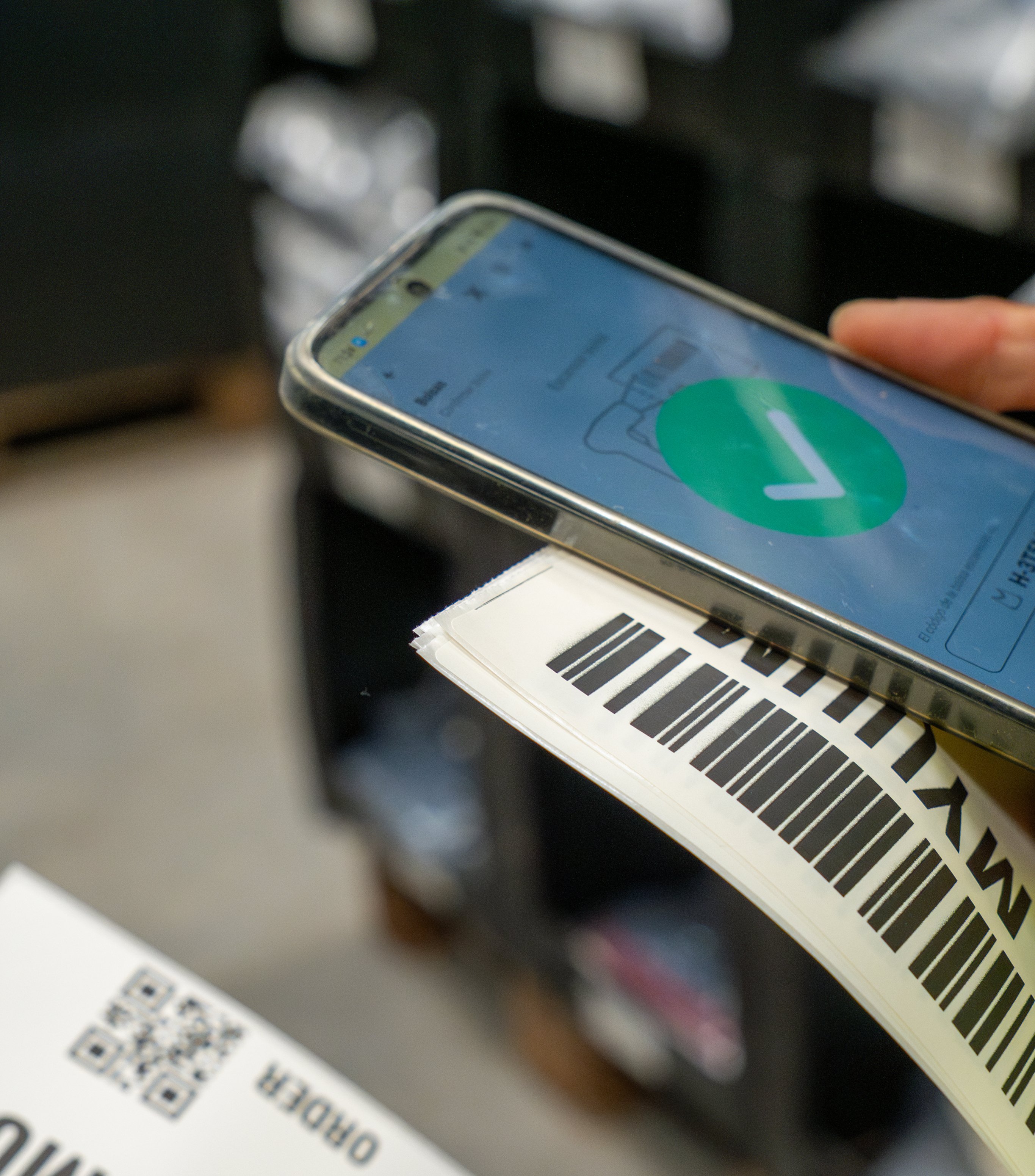
The classic barcode requires an operator to aim directly at the line with a scanner. **RFID** allows reading hundreds of products at once from several meters away. You can register the contents of a closed box without opening it.
Each RFID tag has a **globally unique code**. Barcodes only identify the product type, not the exact unit. Radio frequency reduces labor time and eliminates inventory errors.
## **RFID applications in the warehouse**
This technology optimizes every corner of the supply chain. Precision improves from goods reception to delivery.
### **Automatic inventory control**
The system updates available stock without the need for manual counts. It prevents **stockouts** immediately. You know what you have and where each unit is located.
### **Error-free picking and packing**
Operators locate items quickly using receiver devices. The margin for human error is reduced to zero during order preparation. Boxes always leave the warehouse with the correct products.
### **Real-time traceability**
You can track the exact path of a package in every logistical phase. It facilitates the management of **reverse logistics** if a customer processes a return. The information syncs with your platform instantly.
## **Benefits for your ecommerce**
The use of radio frequency accelerates delivery times. Customers receive their purchases quickly and without unpleasant surprises. Efficient inventory control reduces monthly storage costs.
Your business becomes **scalable and competitive**. You can handle a high volume of sales during special campaigns without overwhelming your team. Customer satisfaction increases and your brand's reputation is strengthened.
-
-
- [English](https://blog.amphoralogistics.com/en/qr-rfid)
- [Español](https://blog.amphoralogistics.com/qr-rfid-ventajas-y-diferencias)
- [Français](https://blog.amphoralogistics.com/fr/qr-rfid)
- [Italiano](https://blog.amphoralogistics.com/it/qr-rfid)

---

- Fulfillment
- [¿Qué es?](https://www.amphoralogistics.com/fulfillment)
- [¿Cómo mejora mis ventas?](https://www.amphoralogistics.com/fulfillment#improve-your-results)
- [Sobre la plataforma](https://www.amphoralogistics.com/fulfillment#platform)
- Gestión de almacén
- [¿Qué es?](https://www.amphoralogistics.com/gestion-almacen)
- [¿Cómo mejora mis ventas?](https://www.amphoralogistics.com/gestion-almacen#effective)
- [Sobre la plataforma](https://www.amphoralogistics.com/gestion-almacen#platform)
- Recursos
- [Blog](https://blog.amphoralogistics.com/)
- [Descarga e-books](https://hello.amphoralogistics.com/ebook-aumentar-ventas-ecommerce)
- Sobre nosotros
- [Nosotros](https://www.amphoralogistics.com/sobre-nosotros)
- [Valores y misión](https://www.amphoralogistics.com/sobre-nosotros#values)
- [Inversores](https://www.amphoralogistics.com/sobre-nosotros#investors)
- [Trabaja con nosotros](https://app.sesametime.com/jobs/amphoralogistics/all)

[](https://cta-redirect.hubspot.com/cta/redirect/7553849/1b151106-aab4-4df3-951f-d6bb4c1a4892)
C/ Travessera de Gràcia 56-58, 08006 Barcelona
info@amphoralogistics.com
- Todos los derechos reservados
- [Política de privacidad](https://amphoralogistics.com/es/legal/)
- [Política de cookies](https://amphoralogistics.com/es/legal/)
```json
{
"@context" : "http://schema.org",
"@type" : "Article",
"author" : {
"@type" : "Person",
"name" : "Inés Martínez"
},
"dateModified" : "2/09/2026",
"datePublished" : "2026-07-24 07:00:00",
"description" : "QR y RFID: ventajas y diferencias, la mejor opción para tu logística y gestión de almacén. Permiten tener una trazabilidad del producto y inventario.",
"headline" : "RFID: What It Is and Its Applications in Logistics",
"image" : "https://7553849.fs1.hubspotusercontent-na1.net/hubfs/7553849/DSC01124-Mejorado-NR%201-1.jpg",
"mainEntityOfPage" : {
"@id" : "https://blog.amphoralogistics.com/en/qr-rfid",
"@type" : "WebPage"
},
"publisher" : {
"@type" : "Organization",
"logo" : {
"@type" : "ImageObject",
"height" : "60",
"url" : "https://f.hubspotusercontent10.net/hubfs/136661/ICC%20-%20Logotipo%20-%20Gris.png",
"width" : "417"
},
"name" : "Amphora"
}
}
```