
Compártelo con tus contactos


A truck starts its engine at midnight, loaded with identical packages. At the same time, thousands of people in different cities press a button on their screens to buy that very same product. Some will receive it at their front door a few hours later, others will pick it up at a neighborhood store, and a small group will have to wait for it to cross a border. The journey an object makes from the moment it leaves the production machine until someone holds it in their hands is an invisible labyrinth where every decision can multiply a company's sales or ruin its reputation in a second. There is a silent strategy that defines that exact path, and mastering it is the only secret to making products sell themselves while you sleep.
What distribution channels are and why they matter
Distribution channels are the routes or pathways that a product follows from the moment the manufacturer creates it until it reaches the final consumer. They function as a chain of links involving different intermediaries, such as warehouses, carriers, and stores.
Choosing the right distribution channels is vital for any business. If the path is too long or complicated, the product will arrive late or will be very expensive. A well-designed route ensures that your items are available in the right place, at the exact time, and at the lowest possible cost.
Main types of distribution channels
Companies organize their deliveries in different ways depending on the number of intermediaries participating in the journey.
Direct channel
The manufacturer sells the product directly to the final customer, without any company in between. It is the classic model of many online stores that prepare and ship their own orders from their website.
Indirect channel
Third-party companies appear here to help distribute the goods. It is divided into two variants:
- Short: There is only one intermediary, such as a retail store that buys from the manufacturer and sells to the public.
- Long: Several agents participate, such as wholesalers, distributors, and small physical stores.
Nowadays, successful brands rely on omnichannel retail, integrating their physical stores, mobile applications, and web pages to offer an identical experience on any purchase route.
Objectives of an efficient distribution strategy
Any company planning its logistics seeks to meet very specific goals:
- Guarantee stock availability: Avoid the dreaded stockout, ensuring that customers always find the item they are looking for.
- Reduce delivery times: Optimize the workflow to cut down on total processing and transport time.
- Lower operational costs: Eliminate unnecessary steps that consume resources without adding real value.
How to optimize your channels with modern logistics
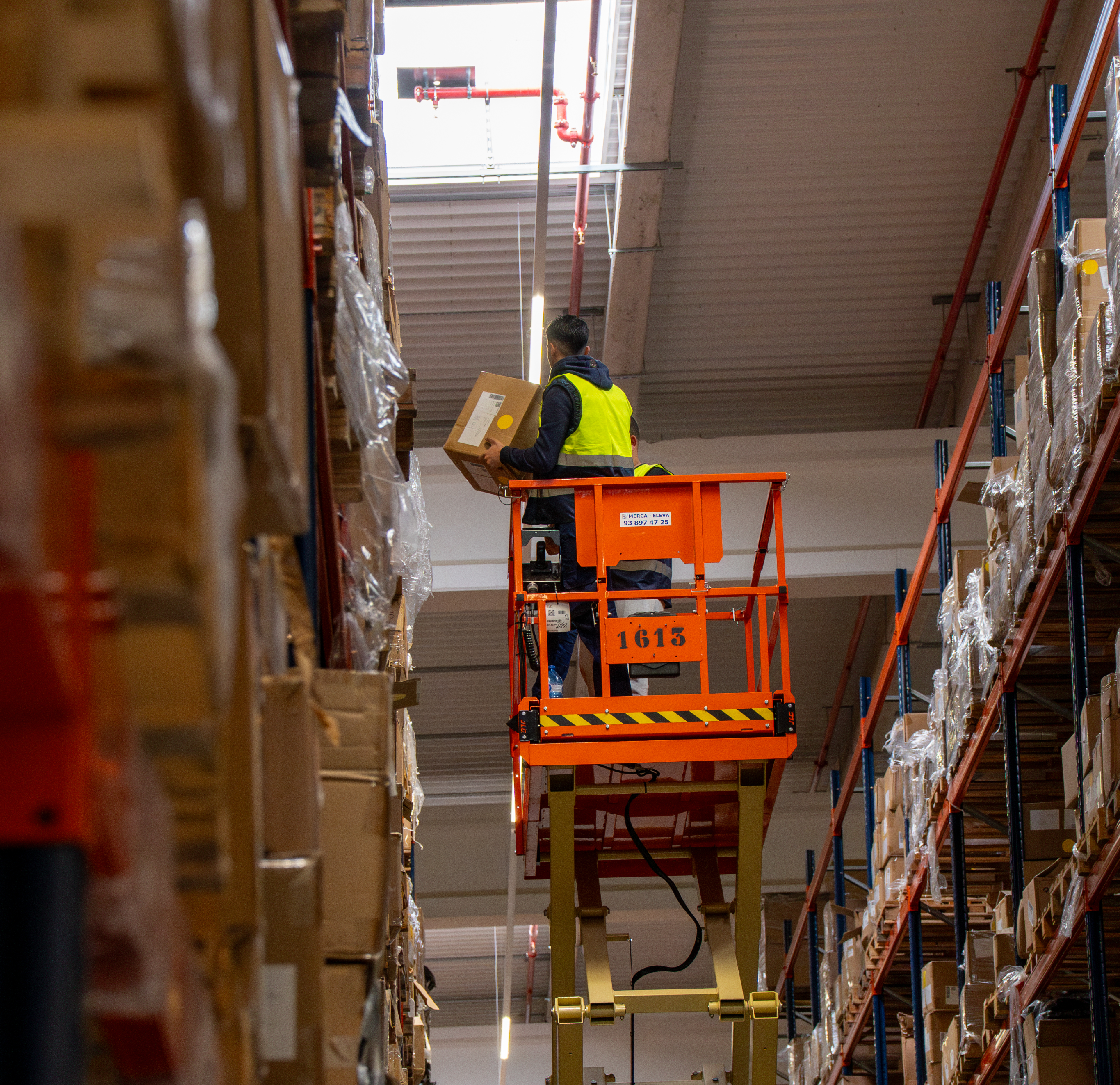
When orders start to multiply across different sales platforms, managing delivery routes manually becomes impossible. To solve this chaos, modern brands centralize their operations in an intelligent ecommerce warehouse.
Outsourcing operational tasks with an expert partner in ecommerce fulfillment allows you to unify all your stock. By connecting your business to an advanced warehouse management system, you automate product entry, organize picking without errors, and control every movement in real time, transforming your logistics into a competitive advantage.